Stop 1 of 16
Paul Cornell's stone
A stone in the park marks the approximate starting point of Hyde Park
Watch this stop
Read more in depth below
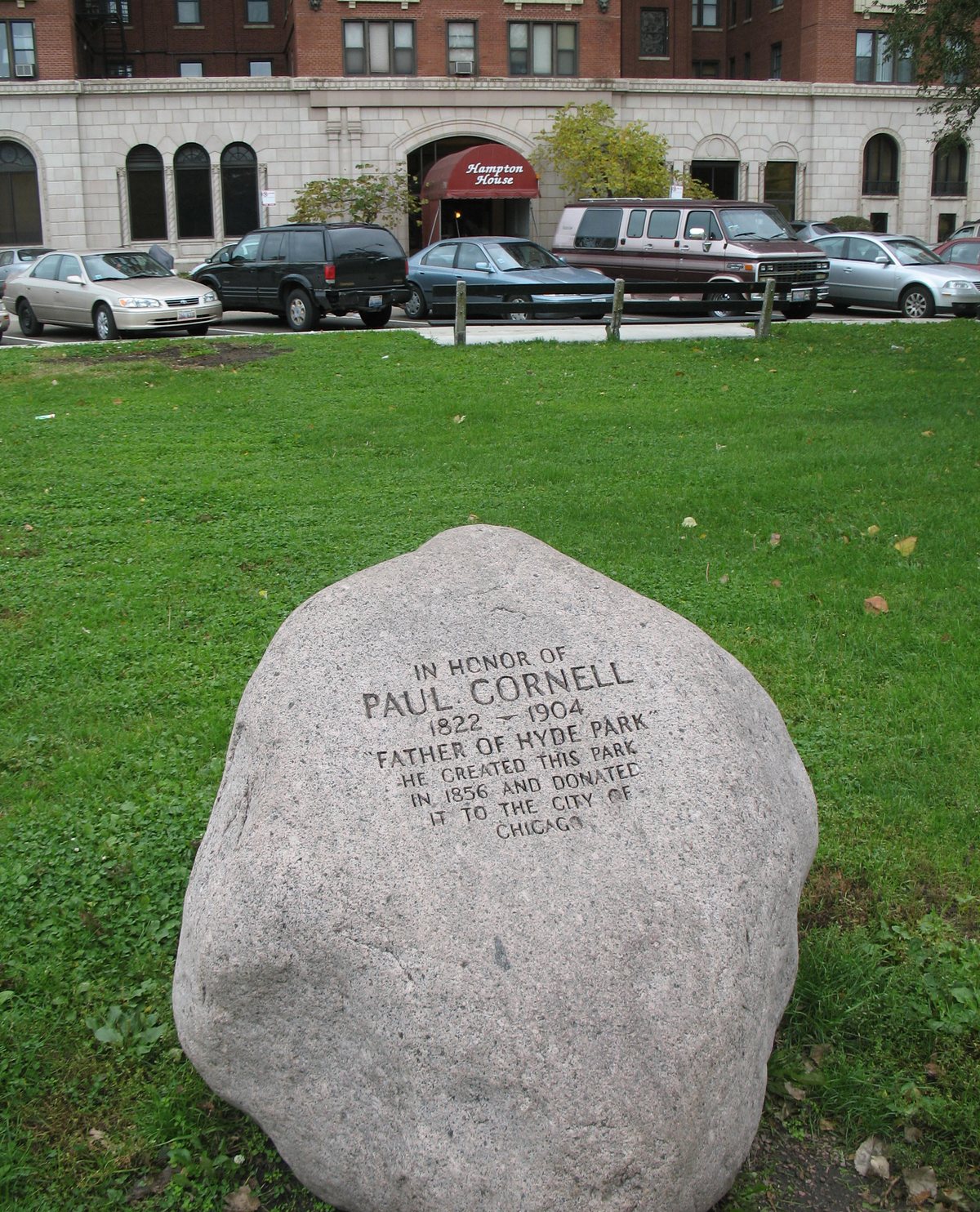
The stone
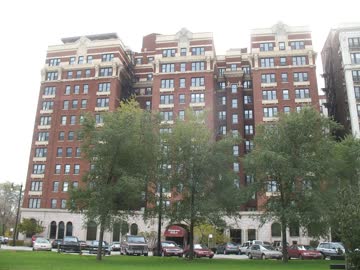
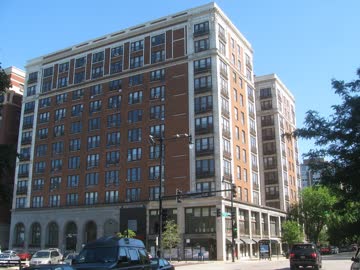
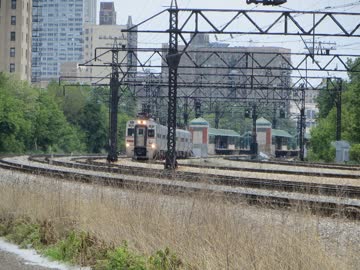
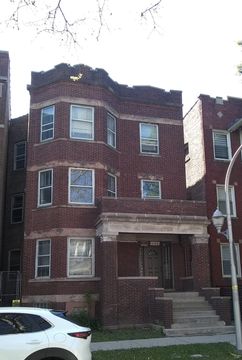
Find the boulder in Harold Washington Park at East 53rd Street and South Shore Drive, across from the tall brick building with the black awning. That building will become important shortly. The stone stands near the place where Hyde Park began. Before continuing, look at the towers on this block and the trains behind the trees. Both trace back to a farm that a lawyer bought near this location in 1853.
Paul Cornell was a young lawyer from upstate New York who arrived in Chicago in 1847 with one dollar and fifty cents. A thief stole his belongings on his first night in the city, so he had to begin again with almost nothing. He later met Illinois senator Stephen Douglas, who advised him to invest south of Chicago because the city was likely to grow in that direction. Cornell eventually rode south along the lake shore, through marsh grass and sand ridges, until he reached a small farm and tavern near present-day 53rd Street. It served travelers making the final part of their trip into Chicago.
In August 1853, Cornell bought sixty acres from Electa Watson Garnsey, the tavern keeper's widow. He continued buying land until he owned about 300 acres of lakefront between roughly 51st and 55th Streets. He named the area Hyde Park to give it a refined image. At the time, Chicago sent sewage into the river and lake and was known for its smell. Cornell marketed Hyde Park as an escape with cleaner air and cooler water for families who could afford to leave the city.
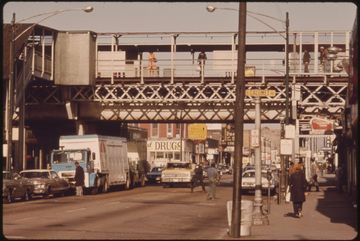
Cornell needed a reliable way to bring those families to Hyde Park. In 1856, he gave the Illinois Central sixty acres of land at no cost. In return, the railroad built a station at 53rd Street and guaranteed daily trains downtown. On the first run, June 1, 1856, the station agent reported that there was not a single passenger up or down. Regular service still began that July, with four trains each day at a fare of seven and a half cents. The line later became extremely busy, carrying more than five hundred trains a day by 1929. Cornell divided his property into large lots, with eighteen lots per block and fifty feet of frontage, and kept the development relatively rural. Early residents maintained gardens, stables, and some animals.
Cornell built the Hyde Park House on the shore as the center of the resort. The hotel stood between the water and the railroad and hosted concerts, parties, and political dinners. Mary Todd Lincoln stayed there for two and a half months after her husband's assassination. The hotel burned in 1877. A generation later, the Sisson Hotel was built on this part of the shore. The brick tower in front of you is that building, now called the Hampton House.
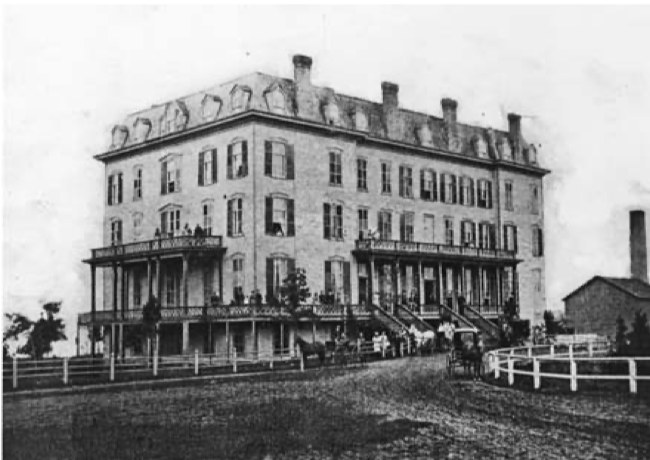
c. 1870s
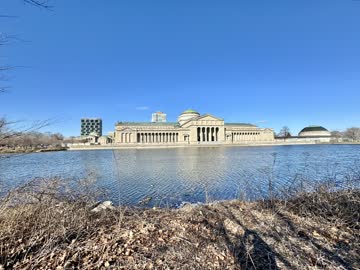
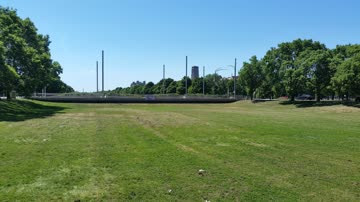
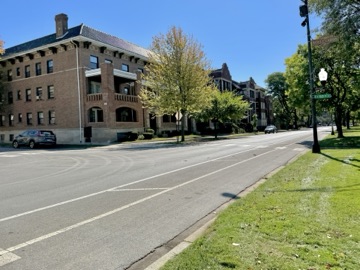
Look east and notice how far the lake is from this corner. The tennis courts out there are close to where the water once stopped. A person standing in 1858 where 53rd Street meets South Shore Drive would have been in the water. A breakwater extended north from the corner and formed a small harbor. When the Sisson opened in 1918, the beach began across a narrow lakefront street. Everything east of you now is manufactured ground. In 1919, the City Council approved filling the south lakefront under Burnham's 1909 plan, and Chicago voters approved twenty million dollars for the project in February 1920. Crews began placing fill at 12th Street and reached 55th Street by 1924. A road opened on the new land in 1929 as Leif Erickson Drive and was renamed Lake Shore Drive in 1946.
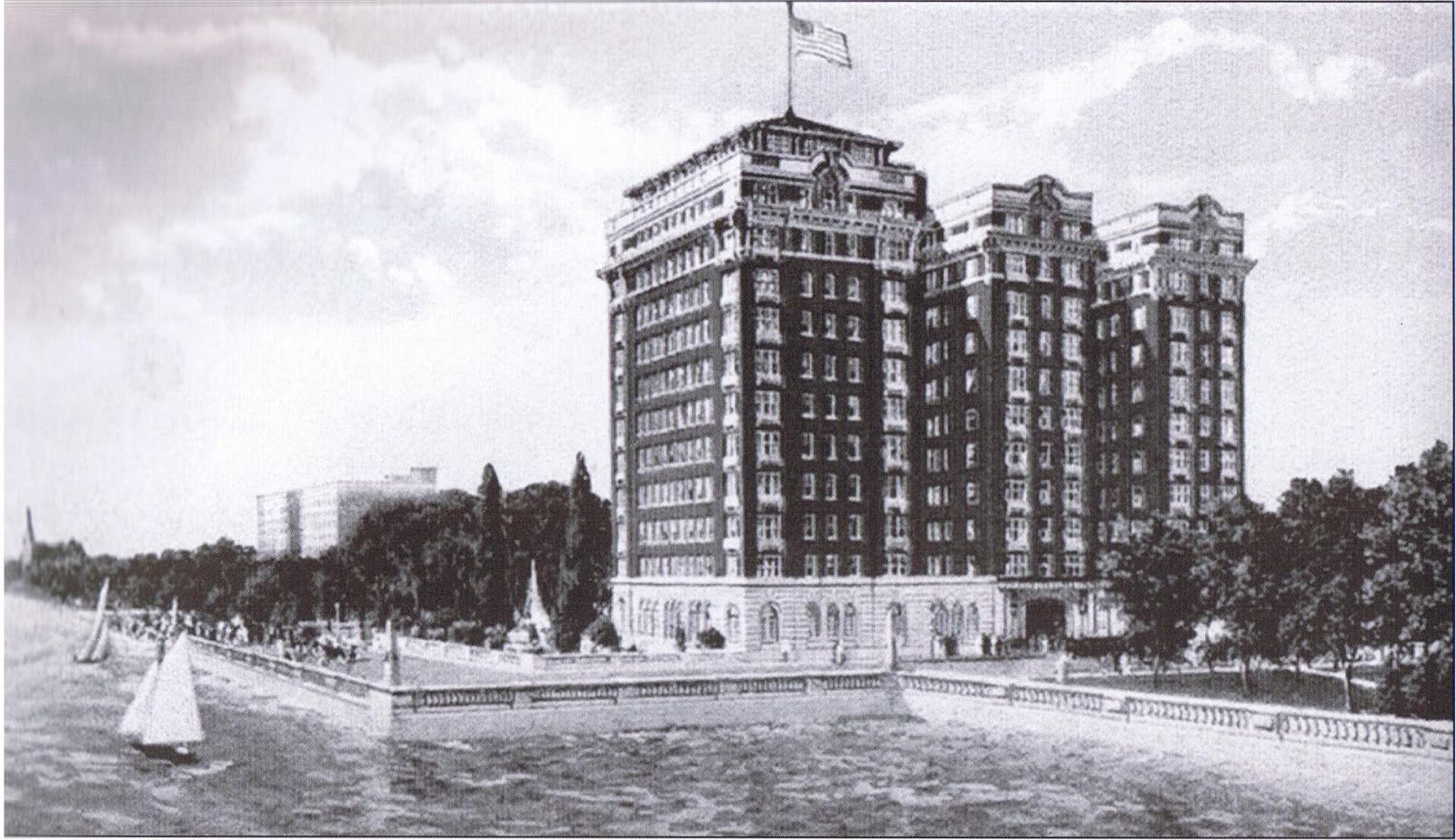
c. 1920
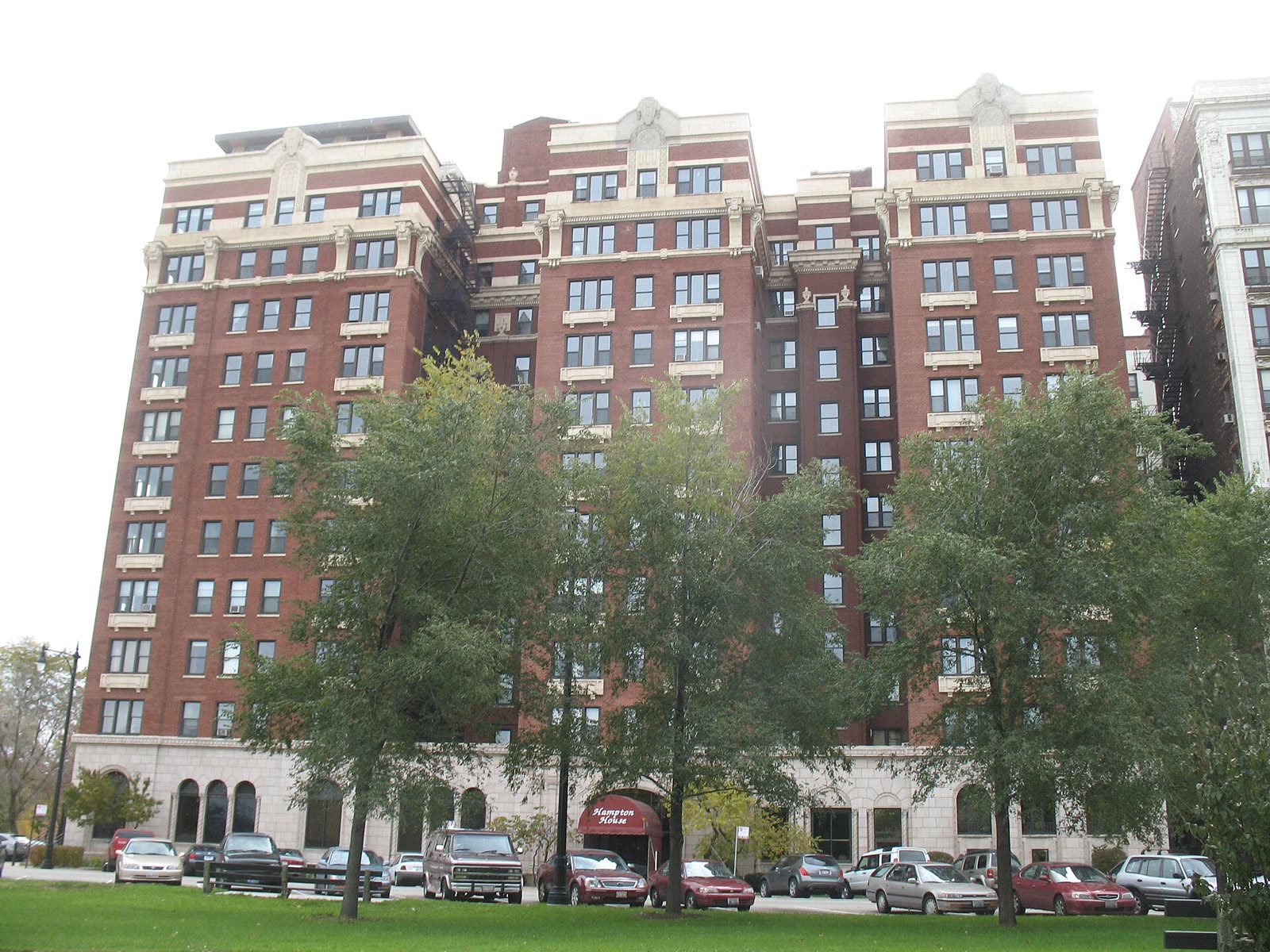
Today
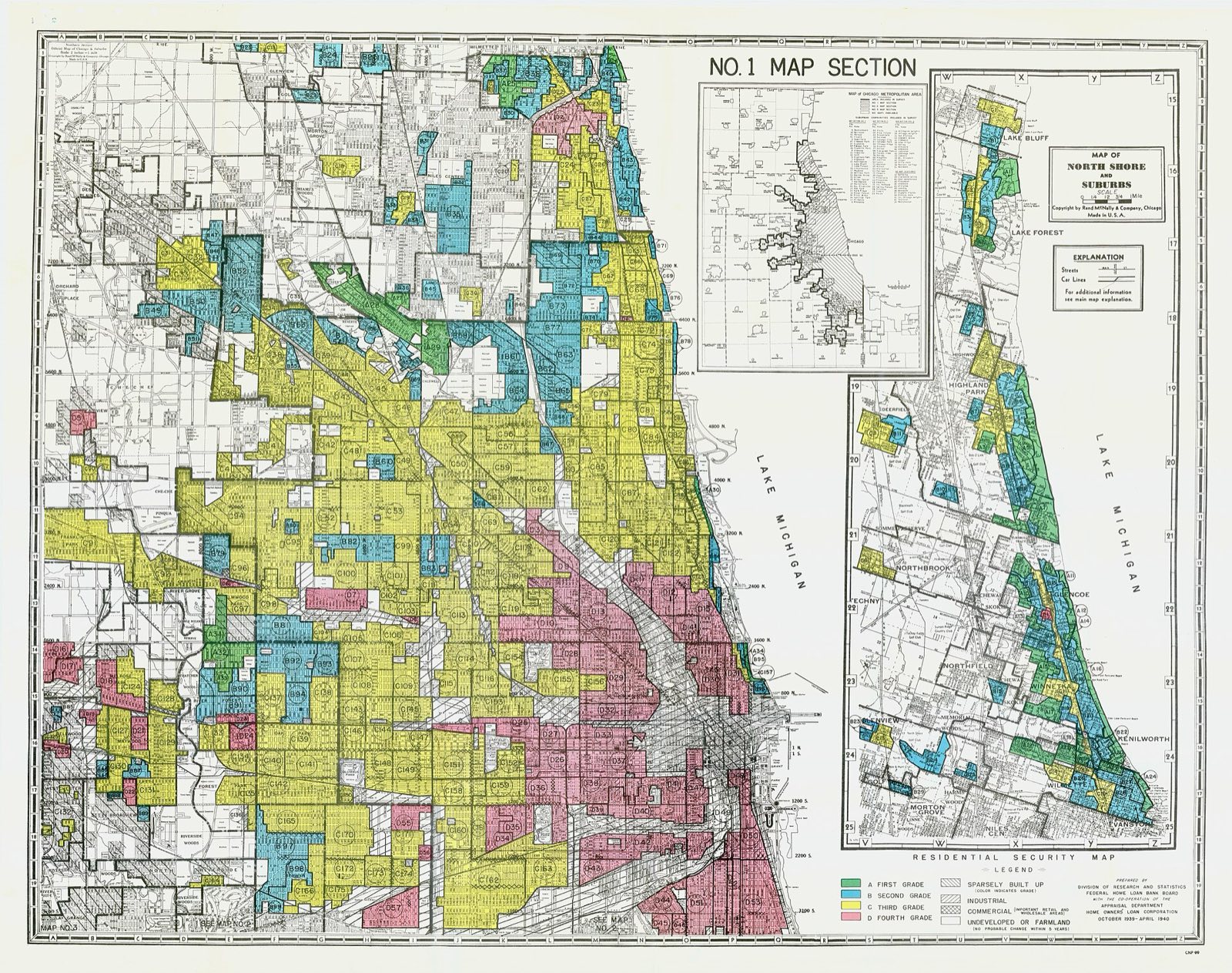
The Sisson Hotel also has a record of exclusion. The Ku Klux Klan operated openly in Hyde Park during the 1920s and printed its weekly newspaper on 55th Street. The American Unity League, a Catholic organization in Chicago, responded by publishing the names of Klan members. The list included Harry Sisson, the hotel's proprietor. Catholic and Jewish guests stopped coming, and the hotel never recovered its earlier business. Sisson sold the property, which was later renamed the Sherry and then the Hampton House. Its ballroom later hosted Duke Ellington and Jewish weddings, and Harold Washington lived in the building beside the park now named for him. Cornell had marketed the lakefront to wealthy families who could leave the city. Sisson made clear which other families were unwelcome, and later stops show the same exclusion written into property deeds.
Next stop
The Del Prado
2 min walk · 400 ft
Leave the boulder and walk west along 53rd Street. The tall brick building on the corner, with carved faces in its terra cotta near the top, is the Del Prado.